October 31, 2012

Routines Restart, if With Less Power and Public Transit


By JAMES BARRON
Published: October 31, 2012
Still hobbled by power failures and waterlogged transit, the New York region struggled to return to the rhythms of daily life on Wednesday, while facing the reality of a prolonged and daunting period of recovery.


Mayor Michael R. Bloomberg was expected to open the New York Stock Exchange on Wednesday morning after a two-day closing, the first for weather-related reasons since 1888, as Wall Street and other businesses began to shake off the storm and return to work.

But as the skies cleared and the sun poked out over Manhattan for the first time in days, the morning commute quickly froze to gridlock. People who normally took the subway or regional rail lines were forced into taxis or their own cars, clogging the streets. Drivers reported delays of hours, with vehicles lined up at the major crossings and at parking garages.

More than 4,000 taxis, which for the moment could be shared among harried commuters, offered another partial lifeline to those cut off by the continued suspension of subway service. Some ferries were expected to be crossing between New Jersey and Manhattan.

October 30, 2012

Northeast Awakes to Huge Damage in Storm’s Path; Millions Without Power


By JAMES BARRON and J. DAVID GOODMAN

As Hurricane Sandy churned inland as a downgraded storm, residents up and down the battered mid-Atlantic region woke on Tuesday to lingering waters, darkened homes and the daunting task of cleaning up from once-in-a-generation storm surges and their devastating effects.
Power remained out for roughly six million people, including a large swath of Manhattan. Early risers stepped out into debris-littered streets that remained mostly deserted as residents awaited dawn to shed light on the extent of the damage. Bridges remained closed, and seven subway tunnels under the East River remained flooded.

The storm was the most destructive in the 108-year history of New York City’s subway system, said Joseph J. Lhota, the chairman of the Metropolitan Transportation Authority, in an early morning statement. “We are assessing the extent of the damage and beginning the process of recovery,” he said, but did not provide a timetable for restoring transit service to a paralyzed city.

At least 16 deaths — including 7 in the New York region — were tied to the storm, which toppled trees and sparked fires in several areas, The Associated Press reported.

Nine hours after making landfall at 8 p.m. on Monday, the storm — already reclassified as a post-tropical cyclone — weakened as it passed west across southern Pennsylvania, though it still packed maximum sustained winds of 65 miles per hour, the National Hurricane Center said. It was expected to turn north and head for Canada late on Tuesday.

October 23, 2012

5 things we learned in Monday's debate

By Mark Preston, CNN Political Director


Boca Raton, Florida (CNN) -- The third and final presidential debate proved to be a substantive, if not sharp, discussion on the major issues facing the nation as both candidates tried in earnest to persuade the small sliver of undecideds to vote for them.
While foreign policy was the overarching theme, it was no surprise that the domestic economy shared center stage as President Barack Obama and Mitt Romney each sought to score points on the No. 1 issue of this election.
In two weeks, the long and bitter campaign will come to a close -- barring an election controversy [shudder the thought] -- and Monday night's debate will help frame the discussion in the closing days.
Reflecting on the 90-minute matchup in Florida, here are five takeaways:

1. Heated, but measured disagreements

The level of animosity between the two candidates was apparent but unlike last week, it was capped due in a large part to the debate format and setting.
It is much more difficult to bring a level of personal anger to a boiling point while seated at a table. Sitting on high chairs with the ability to walk freely on the stage seems to help fuel rage, while sitting together at a table appears to have a cooling affect.

Obama wins final debate, but does it matter?

October 18, 2012

Daniel Cohn-Bendit Why should the Germans pay the debts of the Greeks?


Weil die Griechen auch schon für die Deutschen Schulden bezahlt haben. 1953 gab es einen Schuldenschnitt für die deutschen Kriegsschulden des Ersten Weltkrieges, an dem sich Griechenland beteiligte. Auch dieser Schritt half der jungen Bundesrepublik auf die Beine. Leute wie Herr Dobrindt sollten lieber ins Geschichtsbuch gucken, bevor sie ihren Populismus absondern.

Griechenland hat Daten manipuliert, die Korruption wucherte, wer Steuern zahlte, war der Dumme. Das wiegt schwer.

Sicherlich, Griechenland hat schwere Fehler gemacht. Das politische System war korrupt. Nur dürfen wir nicht vergessen: Athen hatte die vergangenen zehn, fünfzehn Jahren einen Wehr-Etat gehabt in Höhe von vier Prozent des griechischen Inlandsproduktes. Deutsche Regierungen hat das nicht gestört, weil die Griechen fleißig Waffen aus Deutschland und Frankreich gekauft haben. Niemand ist im Europäischen Rat aufgestanden und hat gesagt: "Leute, hört auf, das kann nicht gutgehen."

October 17, 2012

Crosses White Gold 14-k


Made in Greece, Crosses White Gold 14-karat, Stones Diamonds

Parthenon Greek Jewelry

October 16, 2012

Debt Impasse Shadows Race for Presidency


WASHINGTON — President Obama and Mitt Romney will again debate their visions for the next four years on Tuesday night, and if the campaign so far is any guide, they will not acknowledge that the winner’s agenda could depend on the fiscal showdown between Election Day and Inauguration Day.

If Mr. Romney wins, Republicans say they would seek to delay the year-end deadline for a bipartisan deal by up to a year to give him time to flesh out his budget plans and get Democrats to agree. But even if Democrats and the financial markets go along with the delay, the months before Mr. Romney’s swearing-in could be as crucial to his presidency as the transition period was for Mr. Obama four years ago, when the economic crisis led him to draft a big stimulus package while President George W. Bush still occupied the White House.

Mr. Romney’s ability to foster cooperation at the outset could determine his success on a range of issues. Yet Democrats have been dismissive, at best, about his budget plans, which have few specifics on how Mr. Romney would reduce deficits. He has mostly spoken about cutting taxes and increasing military spending.

Mr. Obama, if he loses, would still be president for the lame-duck Congress, but he would have limited leverage. If he gets another four years in the White House, he already has plans to go right back on the campaign trail to build support for his deficit-reduction framework, Democrats say, and administration officials are debating whether Mr. Obama should make some concession to Republicans to spur negotiations.

October 15, 2012

Polls: Obama, Romney in tight race


9:20AM EDT October 15. 2012 - Another poll, another close result between President Obama and Mitt Romney.
Obama leads by a single point -- 49%-48% -- in the latest Politico/George Washington University Battleground Poll released Monday morning, well within the margin of error.
On the other hand, Romney leads 50%-48% in the poll's 10 top "battleground states:" Colorado, Florida, Iowa, Michigan, Nevada, New Hampshire, North Carolina, Ohio, Virginia and Wisconsin.
A Washington Post-ABC News poll gives Obama a 49%-46% lead among likely voters.
Various polls also show a tossup race in the Electoral College.
Obama once led most polls, but things have tightened in recent days for one major reason: The first debate on Oct. 3, perceived by many as a Romney victory.
Obama and Romney debate again Tuesday night in New York, and a third time a week from tonight in Boca Raton, Fla.
Some other highlights of the Politico-GWU Battleground Poll:
Of the 86% of voters who watched the first presidential debate, three in four declared Romney the winner; only 16% thought Obama prevailed.
Romney leads with independents by 8 points, 49%-41%.
Obama still leads with women, 54%-43%.
 Regardless of whom they're supporting, only 53% of voters now believe Obama will win the election (down from 61% before the first presidential debate)
http://www.theworldpress.com/press/worldpress/usapress/usatoday.htm

September 13, 2012

David Hatton, Neighborhood Team Leader


David H., one of our star volunteers, shares why he’s in for Obama 2012.
You know, I used to play golf. I’ve been retired for more than a decade and golf is one of my favorite pastimes; I played every day. But a few months ago, I found something I wanted to do even more: volunteer for Barack Obama’s reelection. Now, the four to six hours I’d spend on the green I spend pounding the pavement, knocking on doors, calling supporters and registering voters. I’m proud to support President Obama in whichever way I can.
I like that he has a long view – a very mature, intelligent, long-term plan for America. He’s not just looking for short-term gains; he wouldn’t have pursued tough battles like health care reform if that’s what he was after. He saw the reforms that were needed to make affordable health care accessible and recognized how necessary they were for our long-term prosperity.

September 11, 2012

Obama Beats Romney in August Fundraising


For the first time in three months, President Barack Obama beat Mitt Romney in monthly fundraising. The Obama campaign announced Monday it raised $114 million in August, edging out the Romney side, which raised $111.6 million.
Both totals included money raised by the campaigns themselves and their corresponding national parties. These "victory funds" can accept larger amounts because the proceeds from one check are divided amongst the campaign, the national party, and several state parties. August marks the first month this election cycle that Obama's victory fund has outraised Romney's.

August 29, 2012

Autumn 2012


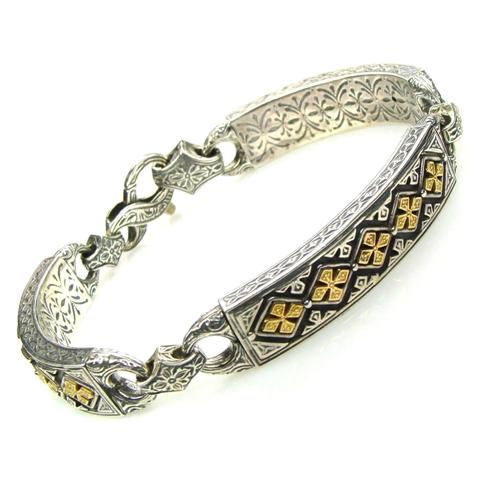
 Bracelet Sterling Silver and yellow gold 18-karats


Bracelets yellow gold 18-karats

July 31, 2012

OLYMPIC VICTORS Leonidas of Rhodes (runner)

Leonidas became famous and was eventually deified for his victories in the stade, the diaulos, and the race in armor (hoplite race). Historical testimonies refer to him as the athlete who ran with a diabolic speed. Leonidas was victorious in all three events in four successive Olympiads, a unique achievement. This is particularly amazing because the three events were all running events. It is more difficult for a runner to have endurance and speed over this period of time (four Olympiads) than it is for a wrestler or a boxer to maintain his strength. For this reason, the accomplishments of Leonidas were more renowned than those of others who were victorious in successive Olympiads in heavy events. Leonidas' first Olympic victories took place in 164 BC (154thOlympiad) and again in 160 BC, 156 BC and finally in 152 BC, when, at the age of 36, he gave his island three more victories and was deified by his fellow citizens

OLYMPIC VICTORS Diagoras of Rhodes (boxer)


Diagoras of Rhodes, the son of Damagetus and great grandson of Damagetus, king of Ialissos, was the most famous boxer in antiquity. Pindar called him "huge". He is said to be impressive not only because of his size but because of his beauty. He was crowned as Olympic victor in wrestling in 464 B.C, in the 79thOlympiad. He was twice crowned winner in the Nemean games, four times in the Isthmian, numerous times in games held at his homeland Rhodes, in the Panathenaea, in Argos, in Lykaion, in Aegina, in Megara and elsewhere.
Diagoras was known for his unique boxing technique. He was called "euthymachos", because he never ducked or sidestepped a blow, but he kept his body erect during competition. He wanted an honest and decent victory, always followed the rules causing pride and admiration among his fans. Pindar composed an ode in his honour and his statue was placed at the Altis.
He was fortunate enough to watch his sons receive the Olympic wreath and be Olympic victors themselves -Damagetos in wrestling, Akousilaos and Dorieas both in the pankration- as well as his grandsons Eucles and Peisidorus. In 448 BC, during the 83rdOlympiad, Diagoras, on top of his victorious sons' shoulders was cheered by the spectators. This was the most glorious moment of his life, and realizing this, a Spartan spectator shouted at him that it would be better if he were to die at that instant, since there was nothing more glorious than to ascend to Mount Olympus and to the gods. Hearing this, Diagoras, still held by his sons, lowered his head and quietly died.

OLYMPIC VICTORS Herodoros of Megara (trumpeter)


Athenaeus refers to the writer Amarantus from Alexandria who gave the description of the most famous trumpeter of antiquity.Herodoros was said to be a man of immense size. He consumed approximately 7 kilos of bread and meat, 6 liters of wine and slept on a lion's hide.
He was the winner in the trumpeter's competition for ten successive Olympiads, the first one being in 328 BC and the last one in 292 BC, spanning almost a period of 40 years. He also helped Demetrios I the Besieger to defeat the town of Argos by simultaneously blowing loudly on two trumpets encouraging the soldiers.

July 30, 2012

The Olympic Games in Antiquity

The Olympiad
The Olympic Games were held every four years, in the second week of July, and lasted for four to five days in the Classical period, even though there were many changes regarding their duration through their long history. Up to the 24th Olympiad (684 BC) they were conducted in only one day, while in the 37th Olympiad (632 BC) three more days were added. Through the centuries, the games developed and new events were added in their programme. During the Olympic Games, the Greeks made sacrifices to Zeus and the other gods of the sanctuary. Various athletic competitions took place and the organization came to an end with large festivities of religious character.


Season and duration of the Olympic Games

The Olympic Games, like the other panhellenic contests, were held once every four years, according to the Greek eight-year calendar. The exact dates of the games were based on the basis of the 28-day lunar month. The games took place during the first full moon after the spring solstice, which coincides with the present day middle of July. This was the hottest period of the year and many athletes found the heat unbearable.
The term "Olympiad" referred both to the time between two Olympic Games and to the days of the games themselves. During two Olympiads, Greeks assembled in various panhellenic festivals that were held at other sanctuaries. The series of the festivals was as follows:
YearSeasonGames
540 BCend of the summer55th Olympiad
539 BCsummerNemea
538 BCspringIsthmia
537 BCsummerNemea
536 BCspringIsthmia
536 BCend of the summer56th Olympiad
The Olympiads were the basis of a national system of dating. Every Olympiad took the name of the athlete who had won the stade race of that year. Later, in the beginning of the 4th century BC, Hippias of Elis, the sophist, numbered all the Olympiads based on the first one, which took place in 776 BC. The catalogue of the Olympiads was later completed by Aristotle, Eratosthenes, Phlegon of Tralles and Iulius Africanus.

July 27, 2012

From Grease to Greece: Travolta and De Niro on holiday


Swapping the silver screen for golden beaches, Robert De Niro and John Travolta have been in Greece on holiday with their families.
For the stars the economic woes affecting the population seem far away.
Travolta told us: “I feel safe, everywhere we’ve gone is safe, and absolutely cool and relaxed. Everybody is happy and there are no problems. Sometimes the news makes thing look worse than they are, but this has been like a dream.”
De Niro added: “We decided to come to Greece, and I’m so glad we did. It’s great, terrific. I will come back and I will see every island in Greece.. in the next few years. I hope I live 50 years, but I doubt it.”
Art imitates life as the pair will star in the upcoming film ‘Killing Season’ where Travolta plays a European tourist.
http://www.euronews.com/2012/07/26/from-grease-to-greece-travolta-and-de-niro-on-holiday/